

proof of...something
there's more than we know

Every year, around mid-August, I notice a wistful feeling start to creep in as my psyche and my senses perceive summer’s peak sliding into fall. Summer camps wrap up as blackberries over ripen and drop to the earth. School shopping gets underway as tomatoes blush red. Young adults pack their bedrooms and head off to start their new lives as peaches come in heavy and sweet. If spring is pregnant with potential and renewal, this time of year—in my perception—heralds memory and meaning.
This has been especially true since my son, Vox, was stillborn in October 2010, and his brother, Dawson, arrived not quite a year later. The memory of back-to-back pregnancies and the months of anticipation leading to such different outcomes makes it an especially loaded time for me. I remember the hopeful anticipation of my first pregnancy that led to breathtaking anguish. A year later, tentative hope and crippling anxiety yielded to relieved ecstasy when I cradled my second son for the first time.
Through this lens of memory, and the cast of summer’s twilight, my emotions rise to the surface, imbuing my days with a more visceral awareness than I typically notice. I am nostalgic, and find myself returning to questions of life and death.
Since Vox died, I have wondered: where did he go? How will I know him if we are someday reunited since I never saw his eyes? Did he suffer at the end? Had his soul joined with his flesh, or does that happen at birth? My pregnancy with him was unintended…why did it happen at all if he was going to die before he was born? Even fifteen years later, these questions are as urgent and unknowable as ever.
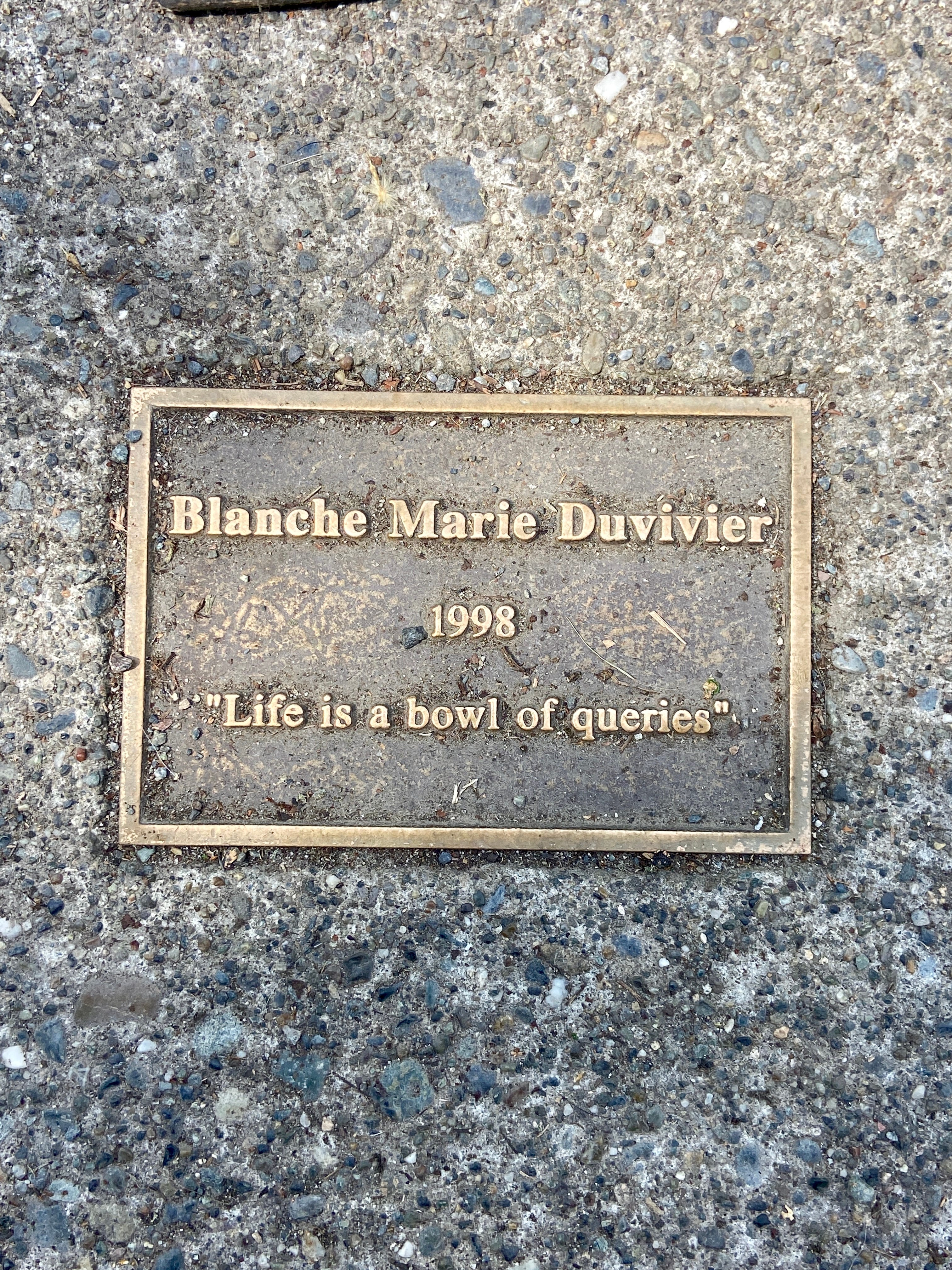
These days, however, my wonderings are informed by experiences I have had since then, which might suggest evidence of a world beyond, or unseen helpers, or an afterlife in some form.
For example, a couple years after Vox was born, an energy intuitive gave me a spontaneous reading that echoed sentiments a psychic had shared with me while I was newly pregnant with him and worried I might miscarry. The two women shared the same four points, which were random but so specific I don’t know how it could be a coincidence.
In 2023, I had to help my beloved dog, Gizmo, out of his physical body, which was 16 years old and in precipitous decline. Last year, on Memorial Day weekend—the same weekend he died—I ran into a friend while walking Green Lake. She was especially excited to see me and had been planning to call me, she said. We made a coffee date for the following day during which she told me about an experience she had earlier that week at the Esalen Center in California. She was attending an executive retreat and they had brought in a psychic medium, presumably to stimulate curiosity and conversation.
When the medium began his second reading, he said to the group, “I’m getting a strong pet energy. Does anyone have a pet named Gizmo?”
When no one else responded, my friend raised her hand. “I have a friend who had a dog named Gizmo…?”
“Oh of course,” said the psychic. “A little white dog. He’s sitting right in front of you.”
The medium went on to apologize that the reading was for me and not her and said, “Please tell your friend that Gizmo says he loves her and that he is happy.”
Hearing this, I was of course thrilled and amazed. Then a part of me thought, That’s it? Such a general sentiment? But I realized it’s what I would also want to tell someone from the other side…of course. I would want to allay their concerns and reassure them about their own life and death.
I recall my mom relating a story about a woman she knew of who was dying of cancer. Right before she died, the woman looked up, raised her hands and said, “How wonderful! You’ve come to pray with me!”
I have a girlfriend whose stepmom passed away recently. During her illness, when it was still unclear whether or not she would recover, her stepmom rose from somnolence to announce to the room that she was going to die. Sadly, she did.
In my job as a hospital chaplain, I am well positioned to witness such deathbed declarations because I attend people who are dying on a weekly—if not daily—basis. To be honest, I always approach these visits with a degree of hope that I’ll get to witness some element I can’t explain. But until a couple months ago, I had never had what I would consider a significant experience that suggested proof of something beyond our perception.
The call came early on a Monday morning, shortly after I arrived. “We have an urgent end of life in 1021.”
I looked up the patient and realized I had met him previously. He was a young man—only 32—with an advanced cancer. I had met him on a different admission a few months before when he was in the ICU. He had just learned that he had around six months to live.
As we got to talking, he shared how much he loved his mom, and how Jesus had saved his life. He’d been messed up, he said, in drugs and alcohol, but he knew he was forgiven by the blood of Jesus. He shared Bible stories that were unfamiliar to me. I listened and nodded along, but eventually had to admit that I am not exactly Christian.
“Well, Jesus loves you anyway,” he told me. We smiled and held each other’s eyes. I liked him.
He was a complex man, with a history of mental illness in addition to polysubstance abuse. He eventually shared his fear that he hadn’t been good enough to get into Heaven, and we explored the nature and meaning of forgiveness. He relived sports victories in his youth and talked about foods he liked. There was no pretense about him, just openness, and a purity that beamed through his smile, which I only got to see as we said goodbye and he thanked me for “making him think about some things.”
The morning I got the call he was dying, I was sorry to hear it, though also glad for him to be nearly free of his suffering, which—based on other things he had shared—I understood to be far more extensive than his cancer alone.
Entering his room, I found his mom at his bedside. She seemed surprised to see me, and relieved.
“Can you pray for him?”
“I would be happy to.”
I got down close so he could hear me, reintroduced myself, and started to pray. His breath was agonal, every exhale an audible sigh that blew right under my mask—too close for my comfort. I spoke quickly and stepped back.
“Don’t you have any anointing oil?” his mother asked.
“I do. Shall I get it?”
She spoke with conviction. “Yes, please go now.”
I wondered, as I returned to my office to retrieve some essential oil I keep for such occasions whether she would mind—or even notice—that it was rose scented. When I could’t find the small container I have used in the past, I considered using a mug printed with, “How’s my Ritalin working?” and smiled to myself. Moments like this offer me a little comic relief, if only in my own mind.
I found a jar of green tea that looked like it had been in the cupboard forever and said a prayer of thanks as I tore off the plastic wrap and emptied the contents into the trash. The container was clear glass the size and shape of a large egg. It was sealed with a wide cork that had a wax seal on top—very sacred looking, I thought to myself. I emptied the rose oil into the little jar and prayed a blessing over the contents, which I figured was the essence of what was required to make it holy. (They don’t teach you these things in chaplain school.) Then I headed back.
It turned out his mother wanted to do the anointing. By the time she was finished, his hair, mouth, and eyes were drenched in oil and his soul was covered with declarations of faith that sounded like they came straight from the pulpit.
“Now you go,” she told me.
I retrieved a printed commendation from my work satchel. I imagined the traditional language would comfort her more than my improvised, earthy-spiritual approach. As I began to read, she interrupted.
“Lord, let us see you. Show us your face!” Her eyes were closed and her hands raised over him. I stood, paused.
She turned to me. “It happens you know. When someone is dying, and they see the face of Jesus. Do you think he’ll see Jesus?”
One thing I regret about being the only chaplain in my hospital is that I don’t have anyone with whom to debrief surreal moments like this after they occur. How could I answer that question honestly? I didn’t want to get her hopes up.
I said, “I have heard of that happening for people, but personally I have never seen someone who seemed to see Jesus or angels at the end of their life. It may be more likely when someone dies outside the hospital…it would seem that being heavily medicated might alter a person’s perceptions.”
She seemed to accept this, and invited me to continue the commendation, but she mentioned it again more than once as the morning wore on. She wanted—maybe even needed—him to see Jesus.
The patient’s blood pressure and oxygen saturation continued to drop as we entered the third hour of sitting together. He was on heavy pharmaceutical support to keep his heart pumping. The plan was to stop those medications when his aunt and cousin arrived. I was becoming more concerned by the minute they would be too late.
To our mutual relief, his cousin finally appeared. I was so glad the patient’s mom finally had the company of someone who knew and loved her and her son. She needed to see that others cared about him.
His breathing was getting louder. The cousin looked at me panicked.
“Why don’t they put a tube in his throat?” I explained why they didn’t do that (it would exacerbate and prolong his suffering).
“What about a CPAP machine?” I explained about that, too (it wouldn’t change the outcome—he was already well into the dying process).
Twenty minutes later, the patient’s aunt finally arrived as his systolic blood pressure was dipping into the 40’s. (That’s the number on top—around 120 is typically desirable.)
The aunt hovered by the door, obviously shaken by the scene, which was indeed dramatic. Oil glistened on the patient’s head and face. His eyes were open but rolling back continuously. His breathing was louder still and his teeth were chattering despite the warm blankets covering him.
I pinched my mask firmly over my nose and went to his bedside. I leaned in close and squeezed his hand gently.
“We’re all here with you now.” I named the family members who were present. “You can go any time you’re ready. Go in courage and faith; you are forgiven. We’re here with you.” Then I stepped back and invited his aunt to speak to him, which she hadn’t done yet.
A moment after she said his name, the patient’s eyes began to change. They seemed to brighten, focus, and clear. The shift was as stark as a person going from sleep to wakefulness.
He looked past all of us to the foot of his bed. And then his slack jaw, which had been chattering with every breath, went still. His mouth closed. His cheeks pulled into an obvious smile.
“Can you see that?” his mom exclaimed.
“He’s smiling!” I said.
“My baby’s seeing Jesus!” she said.
And then his heartbeat stopped. His eyes rolled back, and his jaw relaxed once more. He died.
A scientist might say his brain was undergoing a chemical change just before death that led to the change in his expression, but I don’t believe that. I believe a mother’s prayer was answered, and I’m not so particular that I need an explanation of how. What matters is the comfort it will bring her to trust he’s in God’s care.
As the calendar approaches Vox’s birthday, this memory will comfort me, too, and renew my faith in the Mystery. So much is unknowable, but I trust in what is—even when it can’t be explained.
Wow! You are a beautiful writer. Thanks for sharing your story with me:)
this is incredibly touching…